Book Reviews
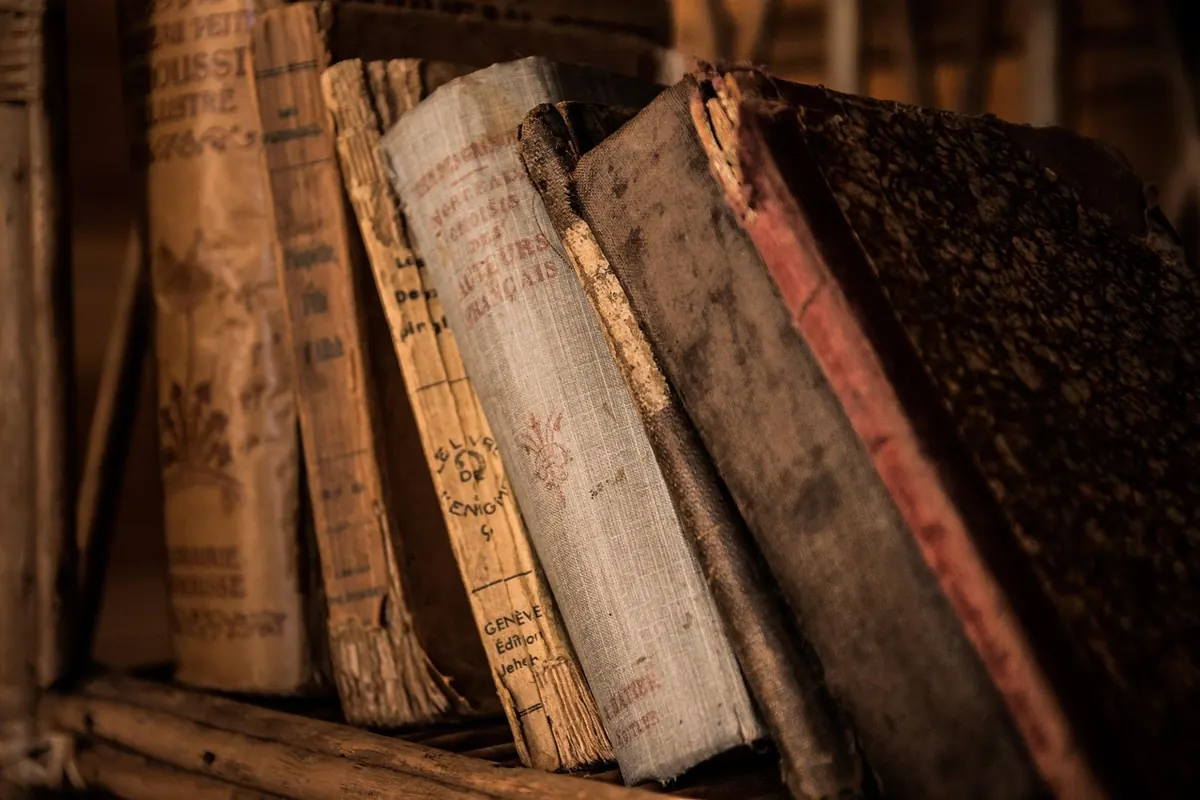
Classic Chess Books Revisited: Are They Still Worth Buying Today?
Ask three club players for a book recommendation and you will probably get the same names: My System, Chess Fundamentals, Logical Chess: Move by Move. All are decades old, and two of them were written before the Second World War. So is your money better spent on something published recently, in algebraic notation, with engine-checked analysis and a cover that does not look like a 1970s school textbook?
Sometimes yes, sometimes no. It depends entirely on the job you want the book to do.
Why the old ones keep being recommended
Books survive when they teach a way of thinking rather than a set of moves. Nimzowitsch on blockades and prophylaxis, Capablanca on simplicity, Chernev on the reasoning behind every single move: these are lessons in judgement. Judgement does not go stale the way an opening line does.
There is a practical advantage too. Many classics have been reprinted for decades, and second-hand copies are everywhere for very little money. They also tend to be generous with explanation. A modern opening book might spend thirty pages on one line and never mention the middlegame plan; an older general book gives you the plan and trusts you to find the moves.
Notation: the real barrier, and how small it is
Most older titles use descriptive notation, so you meet moves like 1. P-K4, N-KB3 and the old-fashioned Kt for knight. It feels alien for an afternoon. After an hour of practice you can read it, and after a week you barely notice.
Descriptive versus algebraic
The genuine cost is accuracy. In long variations, or when both sides have pieces on the same file, it is easy to misread N-B3 or R-K1 and follow the wrong piece for ten moves. That is a frustrating way to learn.
So check the edition before you buy. Some well-known titles have been reissued in algebraic notation, but coverage is patchy and different publishers handle it differently. Look at a sample page or the edition description, and confirm it is complete rather than abridged. If an algebraic version exists at a sensible price, take it. If not, descriptive notation is not a reason to walk away.
Where the classics have genuinely dated
- Openings. Recommendations from the 1950s and 1960s were made without modern defensive resources. Lines that once looked comfortable may now be considered dubious. Treat old opening chapters as history, not as a repertoire.
- Absolute rules. Older books state heuristics as laws: never move the same piece twice in the opening, always capture towards the centre. Modern play is full of sensible exceptions, and knowing when to break a rule is part of improving.
- Specific analysis. Engines have found errors in classic annotations, including in famous game collections. The moves may be imperfect; the plans are still instructive.
- Assumptions about play. Some books assume adjournments, long time controls and a style where both sides manoeuvre for forty moves. Club chess online is faster and messier.
None of this ruins the books. It simply means you should read them for the reasoning, not for the verdict on move 23.
What has not dated at all
Pawn structure. Open files. Good bishop against bad bishop. Piece activity, king safety, and the difference between a plan and a hope. Ask a strong player today what decides most club games and you will hear answers Capablanca would have nodded at.
Endgames age best of all. Basic endings are settled, so a technical manual from the middle of the last century is still correct about the fundamentals. Books on thinking method hold up well too: candidate moves, calculation discipline, and the habit of comparing two or three continuations rather than falling for the first idea.
Which classics are worth buying, by purpose
- Complete beginner: Capablanca's Chess Fundamentals. Clear, short and unfailingly sensible, with an emphasis on simple plans.
- Improving club player: My System. Dense and old-fashioned in tone, but the positional concepts underneath are the foundation of how the game is still played. One chapter a week is plenty.
- Learning why moves are played: Logical Chess: Move by Move. Every move of every game is explained, which is unusually generous and ideal if you know the rules but not the reasons.
- Model games: a collection of annotated games by a player whose style you enjoy. Old collections reward a second and third reading.
- Endgames: any solid technical manual, new or old. Readable diagrams matter more than the publication date.
- Openings: buy modern. This is the one category where old books offer historical interest rather than practical help.
How to read a classic so it actually sticks
- Set up a board, physical or on screen. Reading a chess book with it flat on your lap teaches almost nothing.
- Pause before each move and guess it. Cover the next move, decide what you would play, then read the explanation. That single habit turns reading into training.
- Write the lesson in one sentence in your own words. "Rooks belong on open files" is worth more than a tidy-looking book.
- Use an engine only after you have formed an opinion. Checking move 12 straight away feels productive and teaches you nothing about your own judgement.
- Skip what has dated. If a chapter is about opening theory from 1965, move on without guilt.
A practical buying checklist
Decide the job first. If you want a repertoire, buy something recent. If you want to understand plans in the middlegame, an old classic may serve you better and cost less.
Check the edition. Notation, print quality, diagram size, abridgements. A cheap reprint of a great book with tiny diagrams you cannot read is not a bargain.
Avoid old opening monographs unless you want them for the history, and put that money towards something current instead.
Borrow before you buy where you can. Club libraries, public libraries and second-hand sellers all let you test whether the author's style suits you. A heavy, formal translation is not for everyone.
Buy fewer books than you think you need. One classic you play through twice will improve your chess more than five that sit unopened. Start with a single title that matches your level, finish it, and add the next one only when you have.
Photo: jarmoluk / Pixabay
Related Articles